Loading merchant banner…
Practical Home and Kitchen Shopping at Blain's Farm & Fleet
Compare the buying guide with your needs, available space, and budget before visiting Blain's Farm & Fleet.
 Practical Crafts
Where to begin
Start with materials already in the kitchen, recycling bin, linen drawer, or an ordinary grocery trip. A Harvest²Cuisine project states the likely cost, active time, difficulty, cleanup, safety boundary, low-dexterity option, and what to do with it after the season.
Kitchen-to-home crafts
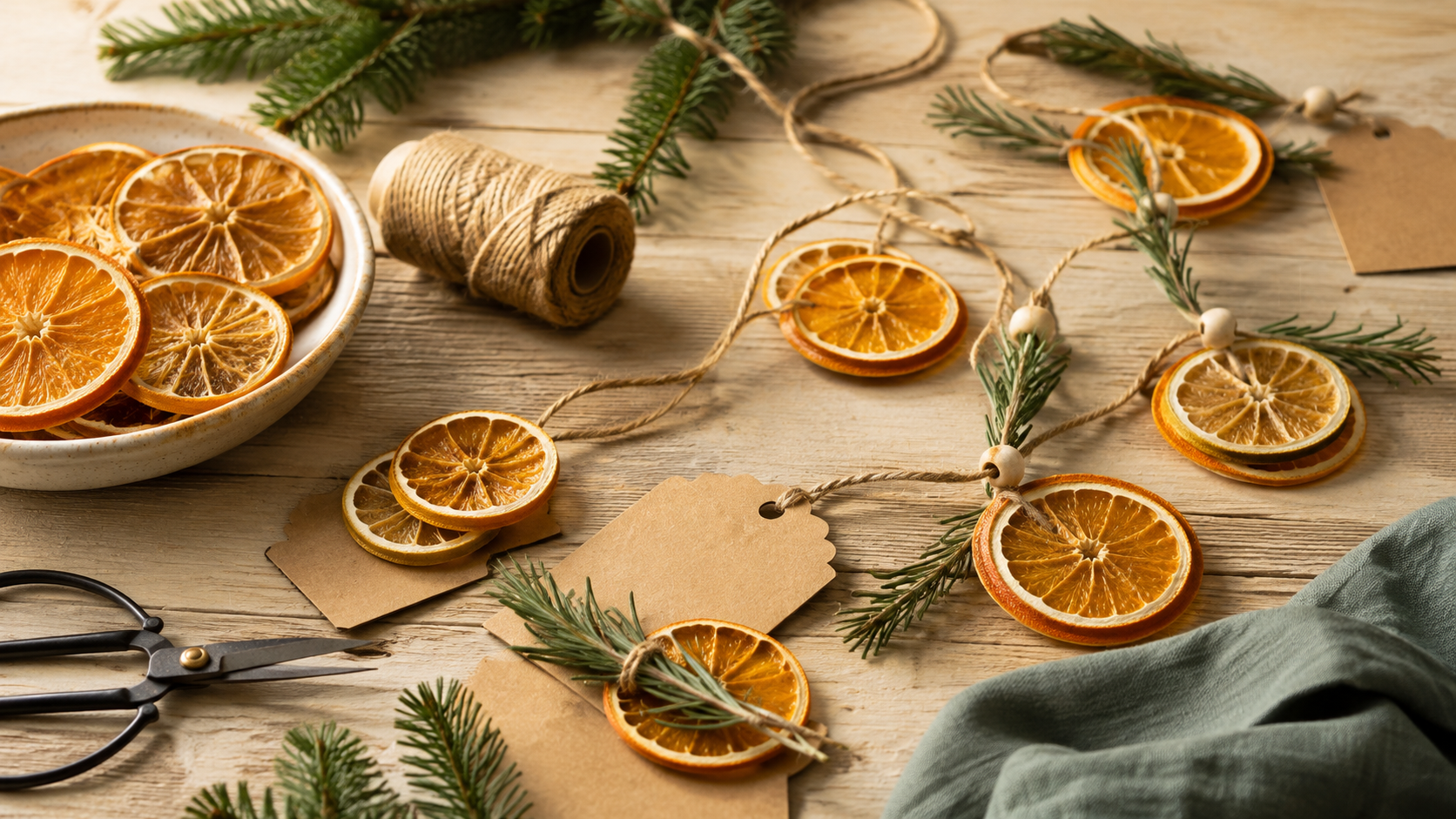
Citrus provides a natural step from kitchen skill into attainable country living. Keep the uses distinct: reserve sound whole fruit for the craft, prepare it on a clean surface, and treat every slice as decorative-only once crafting begins.
Slice, dry, assess, store, and discard safely, with oven and dehydrator routes.
Start with the method → Project · 30–45 active minutesA spaced garland with threaded and clip-on construction, plus a no-needle option.
Build the garland → Project · $0–$8Readable reused-paper cards with an optional citrus detail and a fragrance-free alternative.
Set the table →Repair & reuse
Move from familiar kitchen materials into repair, organization, service, and gift reuse. Every page separates originality from physical testing, uses a text-and-icon evidence label, and keeps heat, flame, food-contact, coating, and allergen limits visible.
Reject uncertain fabric, launder, test dye transfer and fraying, then assign a bounded use.
Start with the material → Repair · $0–$6Patch a localized worn area only when the surrounding towel remains clean and sound.
Review the repair → Organize · $0–$8Fold countable pockets for clean dry utensils and perform a supported carry check.
Fold the roll → Serve · $0–$8Fit round or rectangular baskets while keeping cloth away from hot pans and flame.
Line the basket → Limits-first projectTemporary attended covering—never canning, sealing, refrigeration, or preservation.
Read the limits → Gift · hand deliveryWrap already packaged, cooled, labeled food with a supported carry.
Wrap with purpose →Project standard
Paper for tables and gifts
Clean grocery bags, plain card stock, and sound packaging can become useful table information. The method begins with contrast, legibility, stability, and honest food labeling; color is optional and never carries the instruction alone.
Choose safe paper, test legibility, and build place cards, menu cards, or food-gift tags with one repeatable method.
Start with the method → Guest seatingMake names easy to find with strong contrast, stable folds, and type that does not depend on color.
Set the places → Menu communicationUse a short hierarchy and plain allergen prompts so guests can scan the meal without a decorative puzzle.
Write the menu → Food giftGive the recipient the product name, relevant handling note, allergen prompt, and maker information.
Label the gift →Before the first stitch
Not every worn cloth should be saved. Reject mildew, stubborn contamination, heat damage, unknown coatings, and widespread weakness; give only clean, structurally sound material a specific next job.
Established companion projects
Sturdy names from grocery bags, card stock, or clean packaging.
Make readable cards → Textile · $0–$8Washable ties with no-sew and low-dexterity closure options.
Use the fabric drawer → Magazine coreEditorial reading on safe light, table details, floral companions, and household atmosphere.
Browse the magazine lane →From kitchen to household
Learn what citrus does in food through the Acids ingredient guide.
Use the seasoning diagnostic when sourness or concentration overshoots.
Keep culinary ingredients and craft materials distinct; do not return handled décor to food use.
Dry citrus for a garland, gift tag, or place card with a clear storage plan.
Our practical promise
Harvest²Cuisine begins with culinary foundations, ingredients, cuts, recipes, and troubleshooting, then offers a useful next step. A cooking lesson may lead to a calmer table; grocery-store flowers to a low centerpiece; a worn towel to a sensible repair; or pantry judgment to less waste. Each project should solve a household problem rather than manufacture a shopping list.
Choose food that holds well, then use the hosting and serving lane to stage it without panic.
Bring market judgment to ordinary grocery-store stems and a vessel already at home.
Inspect known-history cloth, then mend one sound towel instead of treating every worn edge as disposable.
Use the full attainable country-living path for buying, reuse, small-space hospitality, and gradual improvement.
What belongs in this collection
Dried citrus, kitchen textiles, and reused-paper table details provide three practical starting points. A new project belongs here only when it has a clear household job, an attainable cost, instructions that do not depend on color, honest testing information, and a safe plan for storage, reuse, recycling, or disposal.
Section created and reviewed by Michael Wayne Deem · Last reviewed August 20, 2026
Advertisement
Loading merchant banner…
Compare the buying guide with your needs, available space, and budget before visiting Blain's Farm & Fleet.
Loading merchant banner…
Compare the buying guide with your needs, available space, and budget before visiting Winebasket.com.
