Loading merchant banner…
Practical Home and Kitchen Shopping at Blain's Farm & Fleet
Compare the buying guide with your needs, available space, and budget before visiting Blain's Farm & Fleet.
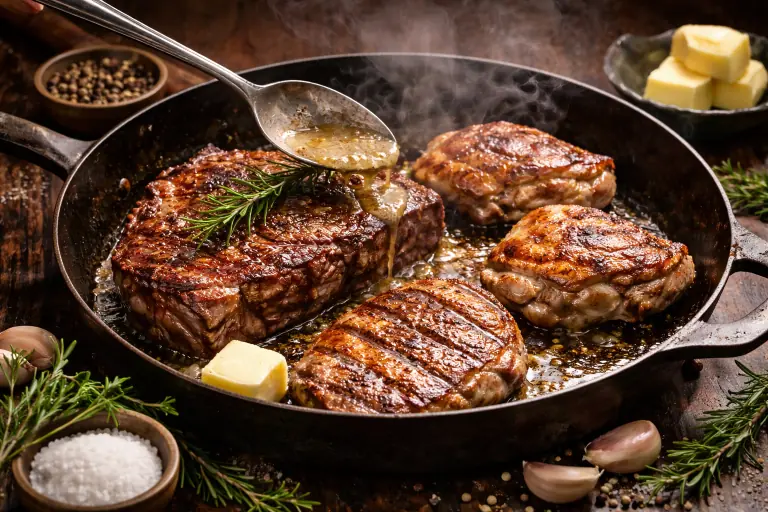
This section organizes methods by what they control (heat transfer, moisture retention, surface browning, and time-to-tenderness). Each technique page follows the same rhythm: definition, what it controls, process standards, failure modes, and corrections.
When readers search for method differences, answer the choice quickly and link into the deeper technique pages.
Technique is the execution layer: you’re controlling heat transfer, moisture, time, and mechanics (agitation, pressure, shear). Recipes are just technique applied to specific ingredients.
If you’re unsure which method fits the ingredient, start with Method Selection.
Use this quick map to choose a technique based on the outcome you want. When the choice is wrong, most “recipe failures” happen even if you followed steps perfectly.
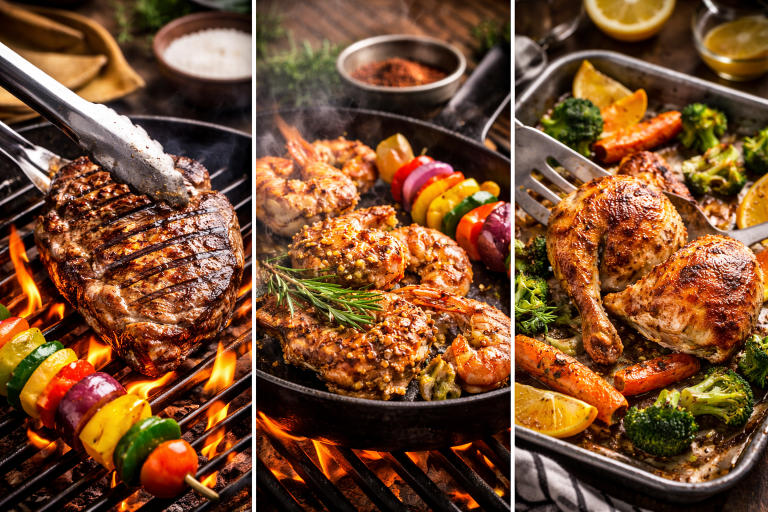
Crust + roasted aromas. Best for tender cuts and vegetables that can dry and brown.
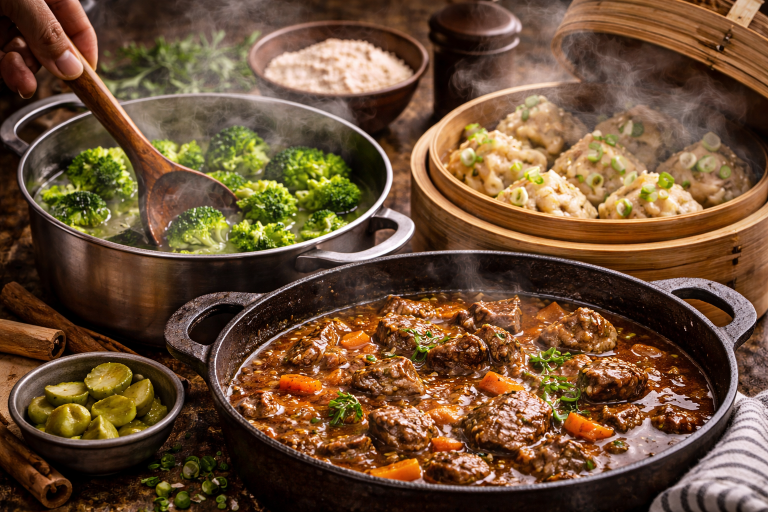
Even doneness, soft textures. Best for delicate proteins and controlled extraction.
Sear + long cook. Best for tough cuts: convert collagen to gelatin without drying out.
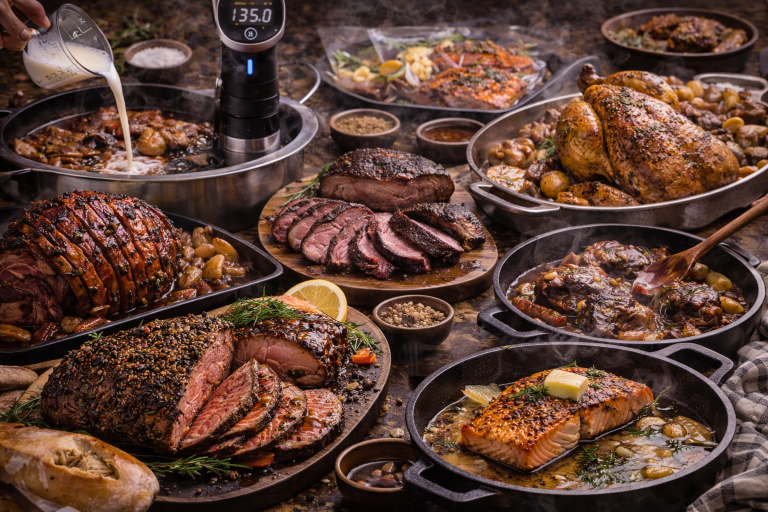
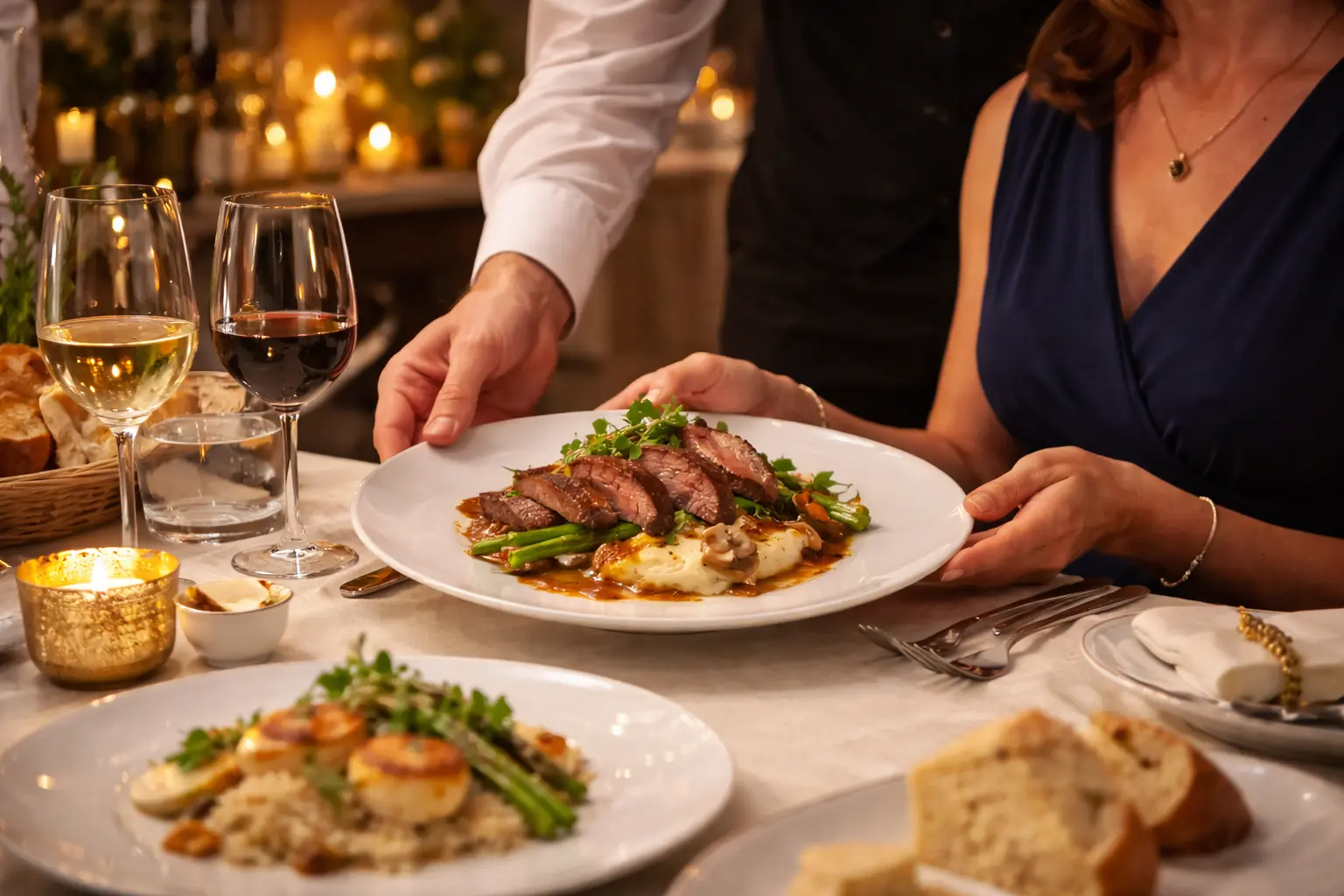
Temperature, timing, and presentation standards so a good cook reaches the table intact.
Each technique page is written like a field manual: it tells you what variable you’re controlling, the minimum standards to control it, and what “wrong” looks like when something drifts. If you read technique pages like stories, you’ll miss the parts that prevent failure. Read them like checklists.
Heat level, vessel mass, batch size, surface moisture, fat choice, and timing checkpoints. These are the dials you can actually turn.
Preheat behavior, contact quality, steady sizzle, steam management, and endpoint validation (temperature + texture cues).
Crowding, wet surfaces, pan too cool, heat too high, sugar burning, or a missed endpoint. Most failures start early — then compound.
Techniques differ, but the standards repeat. If you internalize these, you can execute new recipes with confidence because you’re steering the same control system.
A steady, moderate sizzle is the sound of controlled conduction: the surface is hot enough to drive off moisture and begin browning without scorching sugars or smoking fats. If the sizzle disappears, the pan cooled (crowding, wet load, or insufficient preheat). If the sizzle becomes violent and smoke rises fast, heat is too high (or residues/sugars are burning). Train your ear: it’s one of the fastest feedback loops you have.
When a dish is off, resist the urge to change everything. Diagnose the category first, then apply the smallest correction. Most technique failures fall into one of four buckets: heat, moisture, timing, or mechanics.
| Symptom | Likely cause | Smallest correction |
|---|---|---|
| No browning | Wet surface, cool pan, crowded load | Dry thoroughly, preheat longer, cook in smaller batches |
| Burning before doneness | Heat too high, sugar/fat burning, thin pan | Lower heat, change vessel, finish gently (oven / covered pan) |
| Tough / dry protein | Endpoint too high, no rest, wrong method for cut | Pull earlier, rest, switch to gentle or moist method next time |
| Sauce breaks / looks oily | Heat too high, wrong emulsification timing | Lower heat, whisk off-heat, stabilize with reduction or binder |
For step-by-step diagnosis, use Diagnostic Mode, then return to the technique and apply the smallest correction.
Technique is learned by controlled reps. Pick one variable per rep, change only that variable, and keep notes. The goal is not “a good dinner” — it’s building a reliable internal model of cause → effect.
Related: Service & plating for the “last 5 minutes” that determine whether technique survives the trip to the table.
Templates are reusable execution patterns. When you know the template, you can swap ingredients and still hit the same outcome because you’re controlling the same variables. Use these as “default plays.”
Best for: tender cuts, vegetables that brown well, and dishes where aroma and texture come from a crust.
Best for: delicate proteins, broths, poaching, controlled tenderness without crust.
Best for: tough cuts, legumes, long-cook vegetables, and dishes where the sauce becomes part of the structure.
Sauces feel mysterious until you see the pattern: you are controlling water (reduction), fat (emulsion), and structure (thickening). These are technique moves, not “secret ingredients.”
Deep dives: Sauces & reduction and Thickening.
When you’re unsure, make the decision with three questions:
Then commit to the standards: preheat, manage moisture, manage load, verify endpoint, rest, and serve with intention.
If you want faster progress, keep short notes that capture controls, not feelings. After a cook, write: heat setting, vessel, batch size, surface prep (dry or not), endpoint, rest time, and one correction you would apply next time. Three cooks later, patterns appear.
Not all technique is heat. Many outcomes depend on mechanics: cutting, mixing, agitation, pressure, and shear. Mechanics change texture directly and can also change how heat and moisture behave.
Smaller pieces cook faster and release more starch/protein into liquids. Uniform cuts create uniform doneness. When texture is uneven, look at cut consistency first.
Movement prevents sticking and evens heat, but it can also break delicate foods and emulsions. Match movement to the structure you want.
A lid changes the environment: it traps steam, raises humidity, and reduces evaporation. That can help tenderness, but it can kill crispness.
Emulsions need droplet size control. High shear makes smaller droplets (more stable), but heat and timing still matter.
If a soup is “thin,” it may need more reduction — but it may also need a different cut size or more agitation to release starch. If vegetables are uneven, the oven might be fine — but the cuts are not. If a sauce breaks, the fix might be lower heat — but it might also be slower fat addition or a different whisking pattern. Technique is the integration of heat and mechanics.
Crosslinks: Knife cuts and Thickening.
Turn Index into a repeatable system: inputs → process → controls → outcomes.
Use these as “defaults.” Deviate intentionally and only when you can name the tradeoff.
If you feel lost mid-cook, return to a single dial: heat, time, thickness, or agitation. Stabilize one, then adjust the rest.
Most “bad outcomes” are predictable. Use the signal, then apply the smallest correction.
Answer quickly, then read the explanation. Repeat until you can predict the correct choice before you click.
Quick self-check
1. Best reason to preheat a pan?
2. Crowding a pan usually causes:
3. When you want a crust, the best move is often:
4. A sauce that starts to split: first recovery step?
5. What’s an ‘endpoint signal’?
Advertisement
Loading merchant banner…
Compare the buying guide with your needs, available space, and budget before visiting Blain's Farm & Fleet.
Loading merchant banner…
Compare the buying guide with your needs, available space, and budget before visiting KitchenAid.
From kitchen skill to useful home style
Keep the next step practical: serve it calmly, use what you own, make one useful detail, or improve the household gradually.
Use timing, sequence, and food that waits well to serve guests without last-minute strain.
Open this path Set the tableChoose, condition, and arrange an ordinary bunch in a low household vessel.
Open this path Use what remains soundInspect first, repair only sound cloth, and recognize when laundering or replacement is the safer choice.
Open this path Improve graduallyUse the same method-first thinking for small kitchens, careful purchases, and gradual household improvement.
Open this path