Technique comparison
Searing vs sauteing: when to use each technique
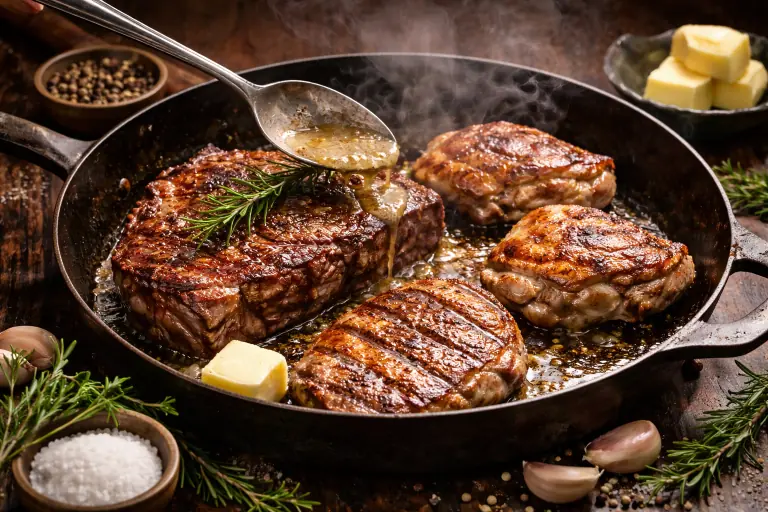
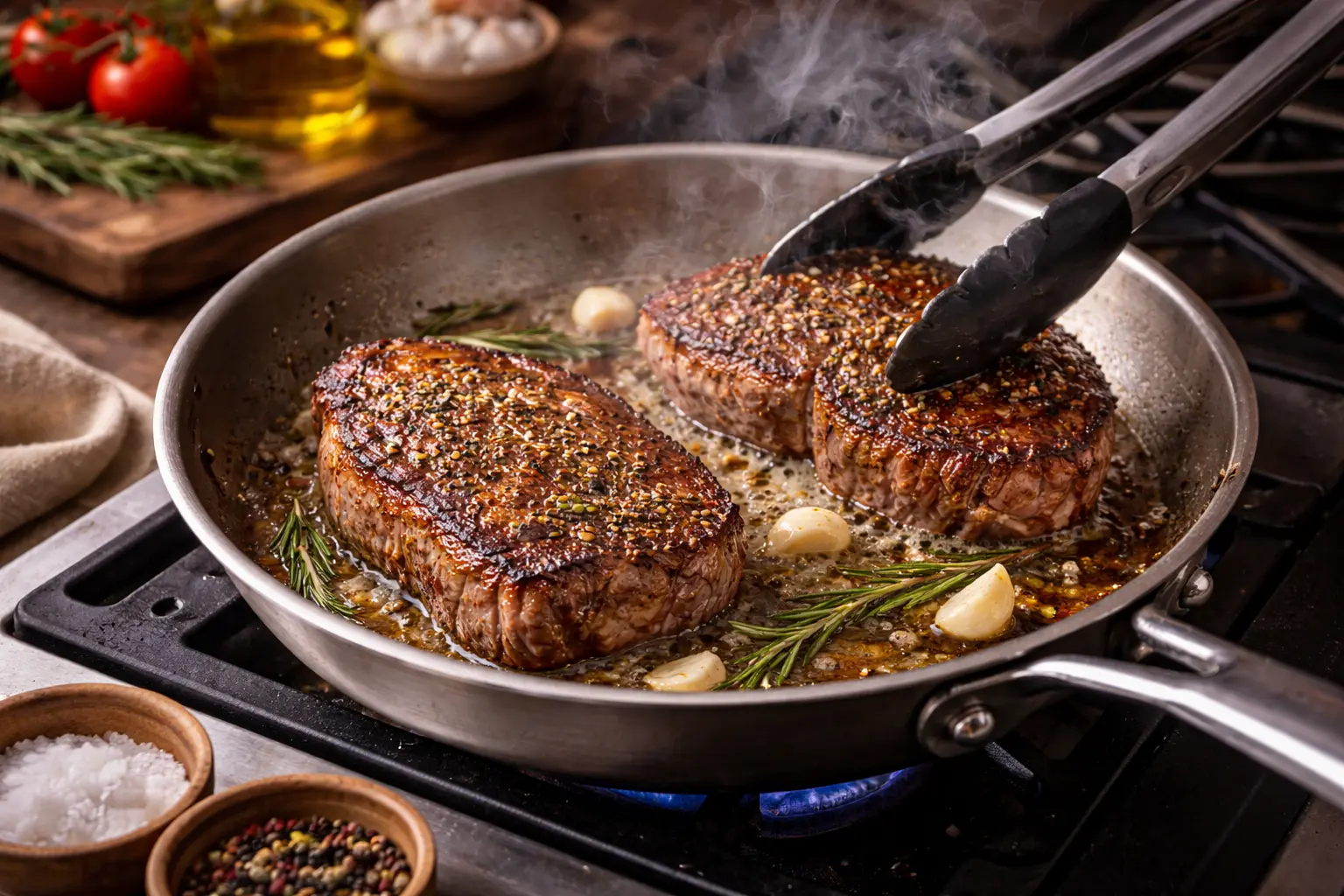
Sear larger pieces and leave them still long enough to brown. Sauté smaller pieces and move them often so they cook quickly and evenly.
Quick comparison
| Question | Searing | Sauteing |
|---|
| Food size | Larger pieces or surfaces | Small, cut pieces |
| Movement | Minimal until crust forms | Frequent tossing or stirring |
| Main goal | Crust and Maillard browning | Quick cooking with light browning |
| Pan heat | Hot enough for steady browning without burning | Medium-high to high, adjusted for food size and sugar content |
| Fat | Thin film; enough to support contact | Enough to coat the pan and food lightly |
| Batch size | Leave room around each broad surface | Leave enough room to toss and let steam escape |
| Failure mode | Steaming, sticking, scorched fond | Watery pan, uneven cooking |
The shared setup
- Dry the food and cut it evenly.
- Preheat the pan, then add a thin layer of suitable cooking fat.
- Add only enough food to keep a steady sizzle.
- For searing, wait for the food to release before turning. For sautéing, stir or toss as the pieces color.
- Check safe doneness with a thermometer when appropriate.
See the difference in practice
How to choose
- Choose searing for steak, chops, mushrooms, tofu slabs, scallops, and anything needing deep crust.
- Choose sauteing for cut vegetables, aromatics, shrimp, sliced meat, and fast pan meals.
- If the pan fills with water, reduce the batch size before changing the recipe.
One useful next step
Turn what you learned into a meal
Choose a recipe, revisit the skill, or compare an optional tool. Open only the detail you need.
01 · Review when needed
Build your core cooking skills
Show the supporting guidance
Keep the explanation handy while planning the meal. Reopen it whenever a step needs clarification.
02 · Try a recipe
White Bean and Kale Soup
What to check first
Read the full ingredient list and method, then decide whether this dish fits your kitchen and the meal you want to make.
03 · Optional affiliate option
Practical Home and Kitchen Shopping at Blain's Farm & Fleet
Why compare before buying?
Consider the task, space, care, and budget before choosing equipment or supplies. A purchase is optional; the recipe and instruction remain available.
We may earn a commission from qualifying purchases through affiliate links.
Affiliate option · Purchases may earn us a commission.
Compare your options →
Shop Blain's Farm & Fleet (affiliate link, opens a new tab)
Advertisement
Enable Marketing cookies to show banners.
Cookie preferences could not open. Check whether your browser is blocking the consent manager, then reload the page.
![KitchenAid]()
Loading merchant banner…
Choosing a KitchenAid Mixer by the Work You Actually Do
Compare the buying guide with your needs, available space, and budget before visiting KitchenAid.
![Blain's Farm & Fleet]()
Loading merchant banner…
Practical Home and Kitchen Shopping at Blain's Farm & Fleet
Compare the buying guide with your needs, available space, and budget before visiting Blain's Farm & Fleet.
1 of 2