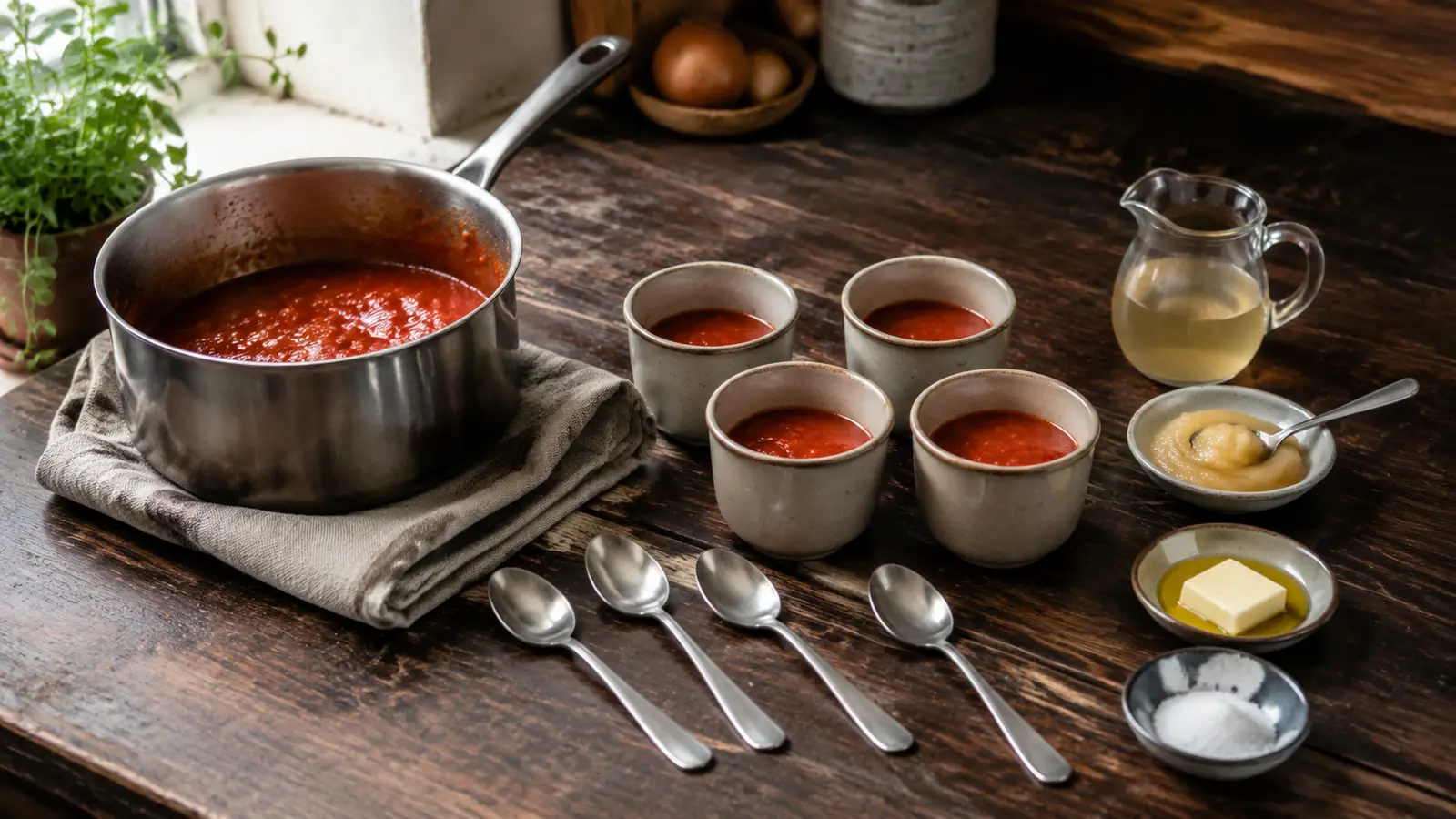
Take it off heat first. If it is thick and intense, test unsalted dilution. If it is thin and sharp, test body or compatible fat. If the texture is already right, test only a tiny sweetness adjustment. Make every experiment in a spoonful before touching the full pan.
Tomato sauce: raw sharpness and concentrated sharpness are opposites
Watery + raw-smelling
Continue a gentle uncovered simmer if the sauce has not developed and is not already salty. Stir to prevent scorching. Onion, carrot, or tomato solids can add body and integrated sweetness.
Thick + intense
Stop reducing. Test unsalted tomato purée, stock, or water according to the intended sauce. Restore body later only if dilution makes the sauce too thin.
Correct texture + sharp finish
Test a small amount of olive oil or butter. If the tomato still tastes pointed, compare a second sample with only a few grains of sugar.
Metallic, scorched, or fermented
Do not treat every unpleasant note as acid. Move unburned sauce away from scorch; discard food with spoilage signs or an unsafe storage history.
Baking soda: test chemistry without sacrificing the pan
Sodium bicarbonate neutralizes acid chemically, which is why a tomato sample may bubble. That same reaction can remove the brightness the sauce needs and leave a flat, salty, or soapy result.
Use only an ordinary cooking sauce. Never change a tested canning or preserving formula.
Place 1 tablespoon of sauce in a small cup.
Add only a few grains of baking soda, stir, and wait for bubbling to stop.
Compare it with an untouched spoonful at the same temperature.
If the sample is dull, salty, or soapy, reject the method and return to dilution or structure.
Do not use this correction in vinaigrette, hollandaise, dairy emulsion, wine sauce, or any preservation recipe. The NCHFP specifically says not to omit the prescribed acid when canning tomatoes.
Stop the heat and test a small sample. Dilute concentration, build body, or round with compatible fat. Sweetness is a later micro-adjustment, not the automatic first answer.
Does butter reduce acidity?
It does not remove acid. Properly integrated butter can round perceived sharpness and improve body, which may make the sauce taste balanced.
Why did sugar make my sauce taste sweet and sour?
The underlying concentration or structure was probably still wrong. Sweetness can suppress some sourness, but too much leaves both qualities obvious. Dilute or rebuild the sauce instead of adding more sugar.
Written and reviewed by Michael Wayne Deem · Last reviewed August 9, 2026
Read a full recipe before adjusting the balance
Use the complete ingredient list and method to understand what the sauce is meant to be. Compare a small sample before changing the whole dish. Flavor adjustments are not a basis for deciding canning or shelf-storage safety.
Compare your sauce with the tomato sauce recipe before deciding whether concentration or the ingredient balance needs attention. All-Purpose Tomato Sauce recipe and method.
Read the hollandaise method to keep its preparation sequence separate from experiments with perceived sourness. Hollandaise Sauce recipe and method.
Use gazpacho as a cold-soup example: follow the complete blending and chilling method before judging the finished balance. Gazpacho recipe and method.
Baked ziti puts tomato sauce into a larger dish. Read the full method before adjusting the sauce as though it were being served alone. Baked Ziti recipe and method.